 Professional Teeth Whitening
Professional Teeth Whitening
Professional Teeth Whitening
A confident, fresh smile can shape first impressions and lift everyday confidence. Teeth Whitening is a clinical approach that gently lightens natural teeth colour to deliver a cleaner, brighter appearance while respecting the health of the mouth.
For many people, the appeal is simple: a more luminous smile that complements their facial features without altering teeth shape or structure.
This approach is about realistic improvement, not dramatic, theatrical change. It is about enhancing what is already there and aligning outcomes with individual needs, preferences, and long-term dental health.
Teeth naturally change colour over time. Everyday habits such as drinking coffee, tea, or red wine, as well as smoking, can gradually deepen surface staining. Even without these influences, ageing alone can cause enamel to thin slightly, revealing more of the naturally darker dentine beneath. Whitening does not "paint" the teeth or cover them with artificial material. Instead, it works by carefully penetrating the enamel and breaking down stain molecules into smaller, less visible particles. The result is a brighter, clearer tone that still looks like your own teeth simply refreshed.
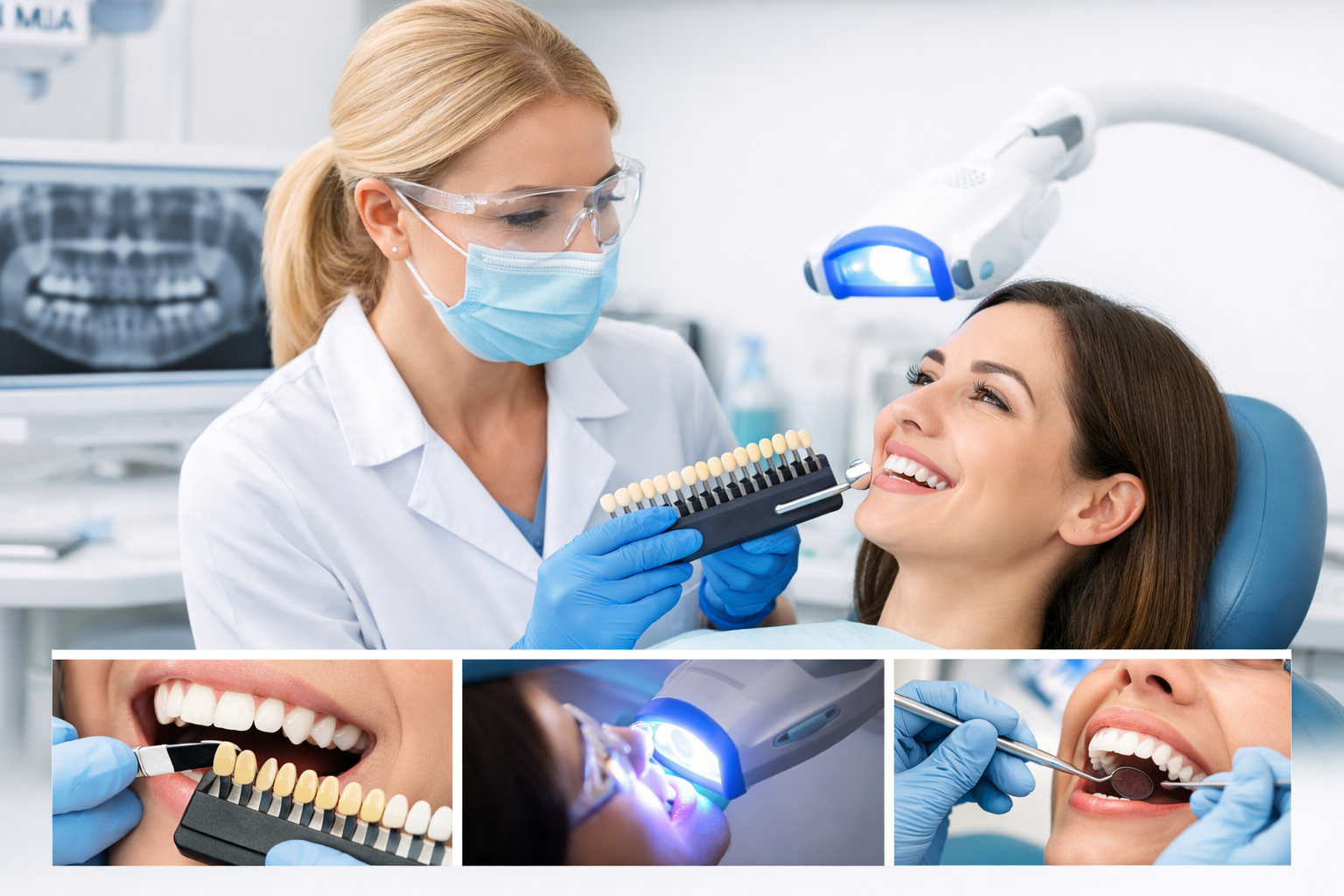
Professional teeth whitening differs from over-the-counter options in ways that meaningfully influence both results and safety. At its core, professional treatment begins with an informed clinical assessment rather than a one-size-fits-all application. Before any whitening gel is applied, a dental professional evaluates the overall health of the mouth. This includes identifying the type and cause of discolouration, whether it stems from external staining such as coffee, tea, or tobacco, or internal changes related to ageing, medication, or trauma. The condition of the enamel is assessed, gum health is checked, and any existing restorations — such as fillings, crowns, or veneers — are examined. This careful appraisal ensures that Whitening is appropriate and that expectations are realistic from the outset.
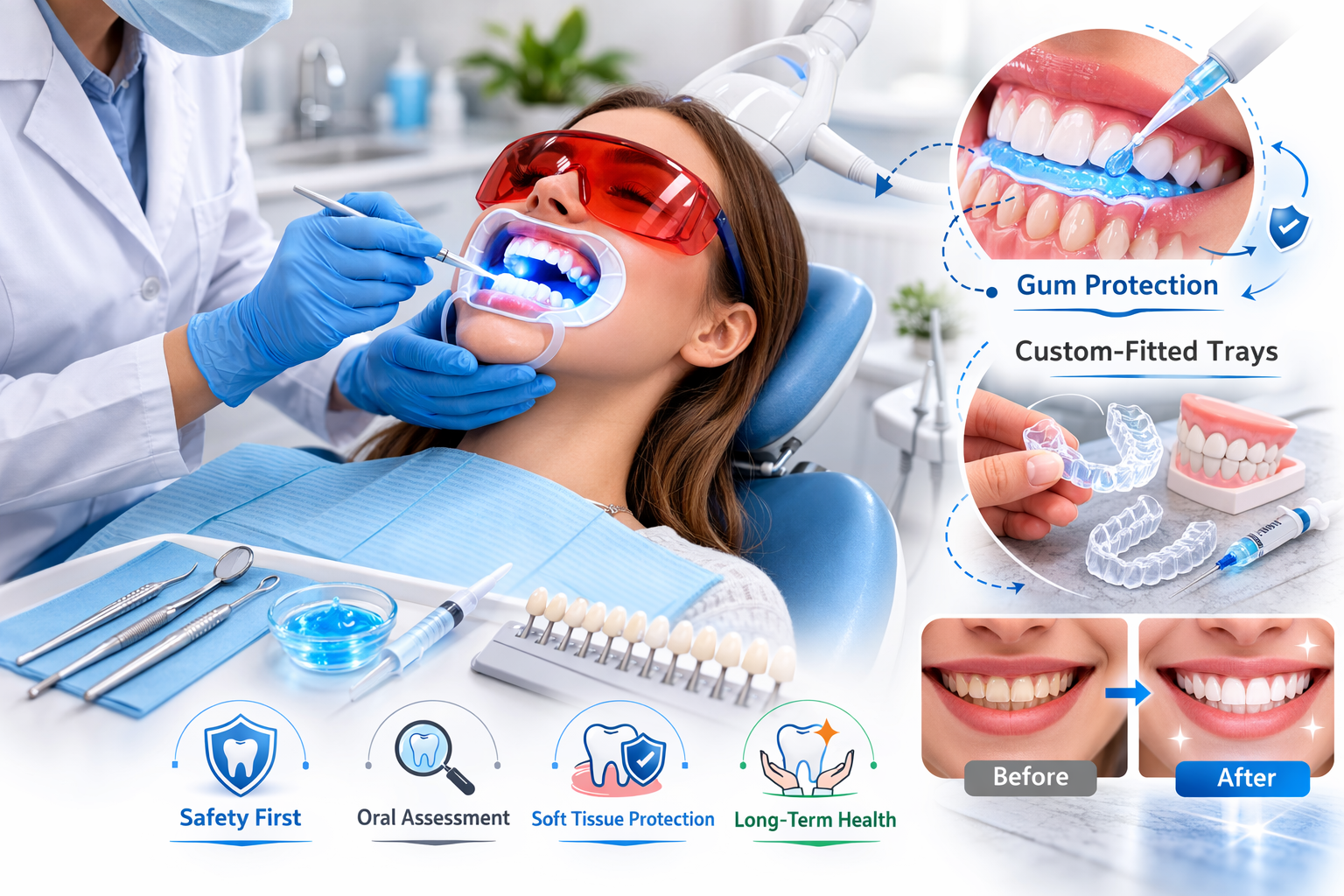
Safety is one of the strongest reasons people opt for professional care. In a clinical setting, protective measures are standard practice. The soft tissues of the mouth, particularly the gums, are carefully shielded to minimise irritation. The concentration of whitening agents is selected based on the individual's dental profile, and exposure times are precisely controlled. Throughout the procedure, the clinician monitors comfort levels and tissue response. Over-the-counter products, while convenient, are formulated for broad use and cannot adapt to the unique characteristics of a single person's teeth and gums. For individuals with a history of sensitivity, enamel wear, or complex dental work, professional oversight significantly reduces the risk of uneven Whitening, gum irritation, or prolonged discomfort.
Predictability is another compelling advantage. Professional whitening systems are designed to provide controlled, measurable results. Clinicians often record the starting teeth shade and track progress methodically. This structured approach allows adjustments to be made if necessary, ensuring the outcome remains balanced and natural-looking rather than overly bright or artificial. Whitening under supervision helps maintain harmony between natural teeth and existing restorations, which do not change colour during treatment. By anticipating this, clinicians can advise on how to achieve a cohesive final appearance.
Flexibility also plays a role in why many people prefer professional options. Some patients seek rapid improvement perhaps for a significant life event — and may choose an in-clinic session that delivers noticeable results in a short period. Others prefer a gradual approach using dentist-supervised home kits that allow them to whiten at their own pace. Each method has its own considerations: faster treatments can occasionally increase temporary sensitivity, while slower regimens may feel gentler and more controlled. A professional will clearly explain these trade-offs, empowering patients to make informed choices aligned with their lifestyle and comfort preferences.
Beyond the immediate treatment, professional teeth whitening emphasises long-term care. Clinicians provide tailored advice on maintaining results, including dietary guidance, oral hygiene practices, and realistic timelines for potential touch-ups. This ongoing support ensures that Whitening is not treated as a standalone cosmetic fix but as part of a broader commitment to oral health. For individuals who value reassurance, safety, and outcomes that complement their natural features, professional teeth whitening offers a carefully managed and dependable path to a brighter smile.
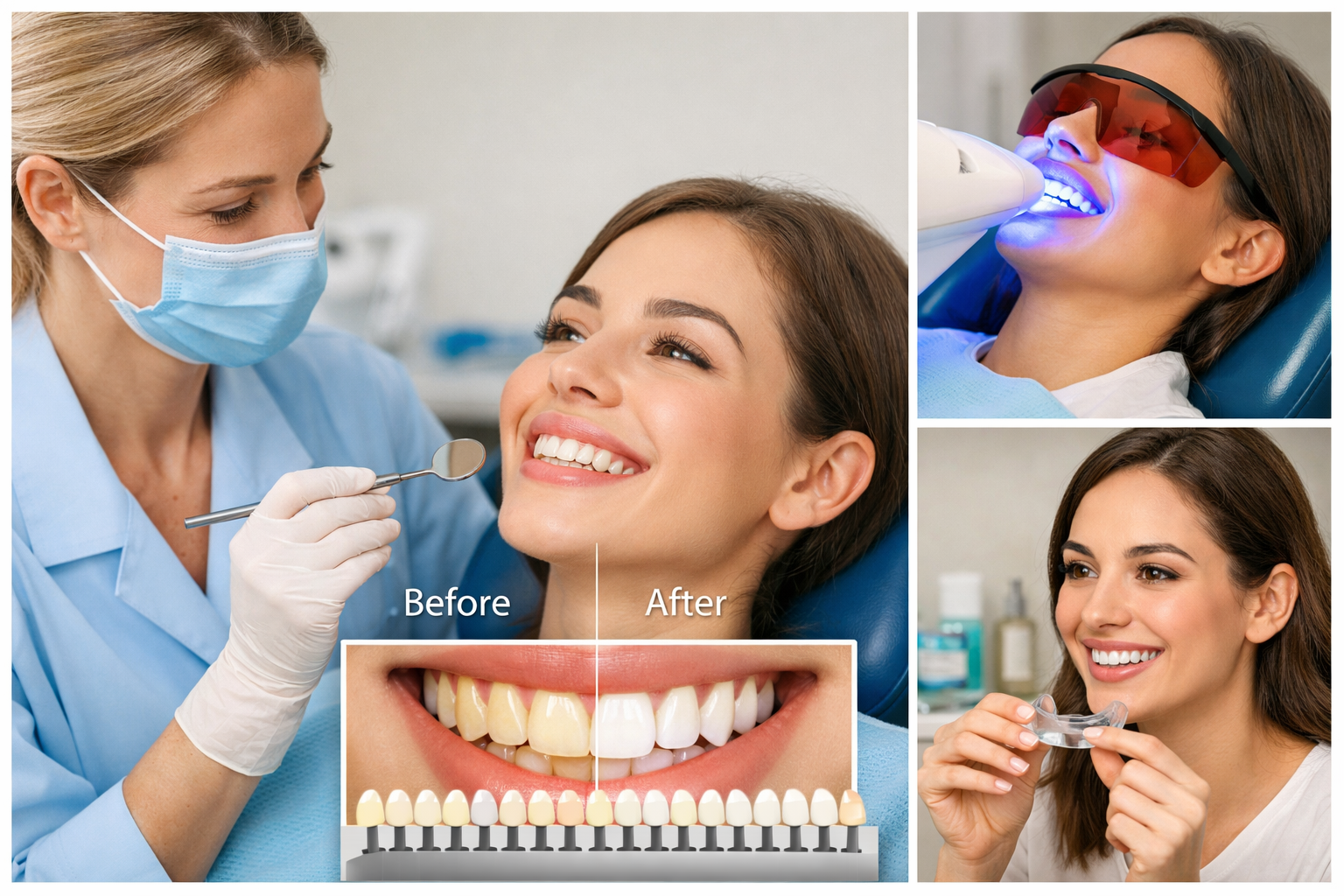
The experience begins with careful assessment rather than impulse. A clinician evaluates the mouth, checking that gums are healthy and that there are no untreated issues such as decay or significant enamel wear. They discuss what outcomes are realistic for the natural teeth structure and explain the available options in clear, balanced terms. Some people may benefit from an in-clinic procedure designed to deliver noticeable improvement in a short period, while others may prefer a gradual approach using professionally prescribed home kits. The result is a tailored plan created to achieve a natural-looking enhancement that fits comfortably into a person's lifestyle and expectations.
The active ingredients most commonly used in professional Whitening are peroxide-based compounds. These agents work by releasing oxygen molecules that penetrate the enamel and break apart the pigmented compounds responsible for staining. Over time, everyday foods, drinks, and lifestyle habits allow stain molecules to settle within the teeth structure. The whitening process gently disrupts their chemical bonds, allowing the teeth to reflect light more evenly and appear brighter.
In a professional setting, concentration and exposure time are selected with precision. In-clinic treatments may use higher concentrations under strict supervision for faster results, while at-home systems prescribed by a clinician use lower concentrations over a longer period. The key difference between professional and unsupervised products lies in controlled dosing, individual assessment, and clinical monitoring. These elements reduce the risk of irritation and unnecessary sensitivity.
Sensitivity, previous restorations, and dietary habits all influence the likely result. For example, fillings, crowns, or veneers do not change colour during Whitening, so this must be considered when planning treatment. A professional assessment ensures that expectations are aligned with what is achievable and that the chosen method minimises potential discomfort. Temporary sensitivity can occur for some individuals, but careful product selection and guidance on use help keep this manageable and short-lived. Addressing these factors openly is part of responsible, patient-centred practice.
Teeth Whitening is a popular and effective option for many adults who wish to refresh their smile without changing the natural shape or structure of their teeth. In most cases, it is best suited to individuals who have healthy, intact natural teeth and who are experiencing external staining or gradual darkening over time. Extrinsic staining — the kind that develops on the surface of the enamel — commonly results from everyday habits such as drinking tea, coffee, or red wine, as well as smoking. Over the years, even without obvious staining, teeth can lose some of their brightness simply due to natural ageing. Whitening can gently lift this discolouration and restore a cleaner, more vibrant appearance.
An ideal candidate typically has good overall oral health. This means there is no active teeth decay, untreated gum disease, or ongoing infection. Whitening products work best on stable, healthy enamel. If cavities or gum inflammation are present, these issues should be addressed first. A professional assessment ensures that the mouth is in suitable condition and reduces the risk of discomfort during treatment. Healthy gums and sound enamel provide a stable foundation for predictable, even results.
It is also important to consider the presence of dental restorations. Crowns, veneers, bridges, and large fillings are made from materials that do not respond to whitening agents in the same way as natural enamel. While the surrounding natural teeth may become lighter, restorations will remain their original shade. This can sometimes create a noticeable contrast. For patients with visible restorations, a clinician may suggest a carefully planned approach — for example, whitening the natural teeth first and then replacing or adjusting restorations to match the new shade. In some cases, alternative cosmetic treatments may be more appropriate to achieve uniform results.
Teeth sensitivity is another factor that influences suitability. Many people experience mild sensitivity during or after Whitening, especially if they already have exposed dentine or thin enamel. However, a history of sensitivity does not automatically rule someone out. A tailored plan can often minimise discomfort. This may include using lower-concentration whitening agents, shortening application times, spacing treatments further apart, or incorporating desensitising products before and after the procedure. Professional supervision allows the treatment to be adjusted to individual tolerance levels, helping to maintain comfort without compromising results.
Age also plays a role. Whitening is generally recommended for adults whose teeth have fully developed. Younger patients may have larger pulp chambers and thinner enamel, which can increase sensitivity and affect outcomes. For this reason, clinicians tend to approach whitening more cautiously in adolescents. Each case is evaluated individually, with enamel maturity and oral health carefully considered before proceeding.
Pregnancy and breastfeeding are additional circumstances that require thoughtful discussion. While there is no strong evidence suggesting harm, most dental professionals adopt a precautionary approach and recommend postponing elective cosmetic treatments until after this period. Personalised advice ensures that any decision is made with safety and peace of mind as priorities.
Suitability depends not only on oral health but also on expectations. Teeth Whitening enhances the natural colour of the enamel; it does not permanently create an opaque, ultra-white shade. Results vary according to the original teeth colour, the type of staining, and lifestyle habits. Individuals who understand that Whitening offers a natural improvement — rather than a dramatic transformation — tend to feel most satisfied with their outcome. Those willing to follow aftercare guidance, maintain good oral hygiene, and moderate staining habits are typically the best candidates for long-lasting, harmonious results.
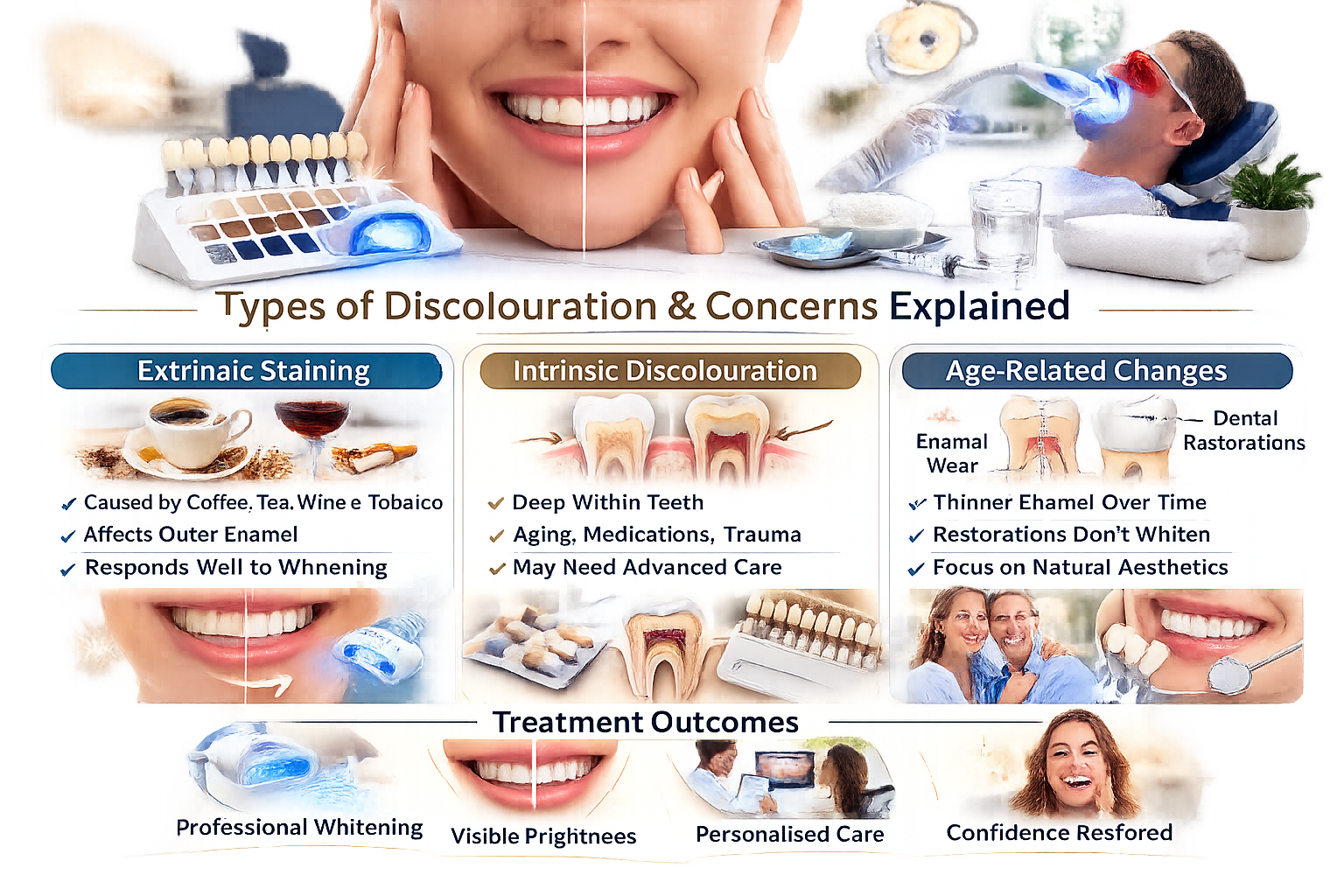
People seek Teeth Whitening for many different reasons, and understanding the nature of teeth discolouration helps set appropriate expectations for treatment.
Surface-level stains — commonly caused by coffee, tea, red wine, richly coloured sauces, and tobacco — tend to respond very well to whitening treatments. These stains sit on the outer enamel and can often be lightened effectively with professional care. Some people want to feel confident in photographs at a wedding or milestone celebration, while others wish to reduce visible staining built up over years of coffee or tobacco use.
Intrinsic stains originate from within the teeth structure itself. These may be associated with natural ageing, certain medications, excessive fluoride exposure during development, or previous trauma to teeth. Intrinsic discolouration can be more resistant and may not respond as dramatically to standard Whitening alone. In such cases, a clinician may discuss alternative or complementary cosmetic options to achieve the desired improvement.
The thickness and quality of enamel change over time, and the presence of existing dental restorations such as crowns or fillings can also affect the final result, as these materials do not whiten in the same way natural enamel does. For many, it is simply about restoring a smile that feels more like their best self — fresher, brighter, and in harmony with their overall appearance.
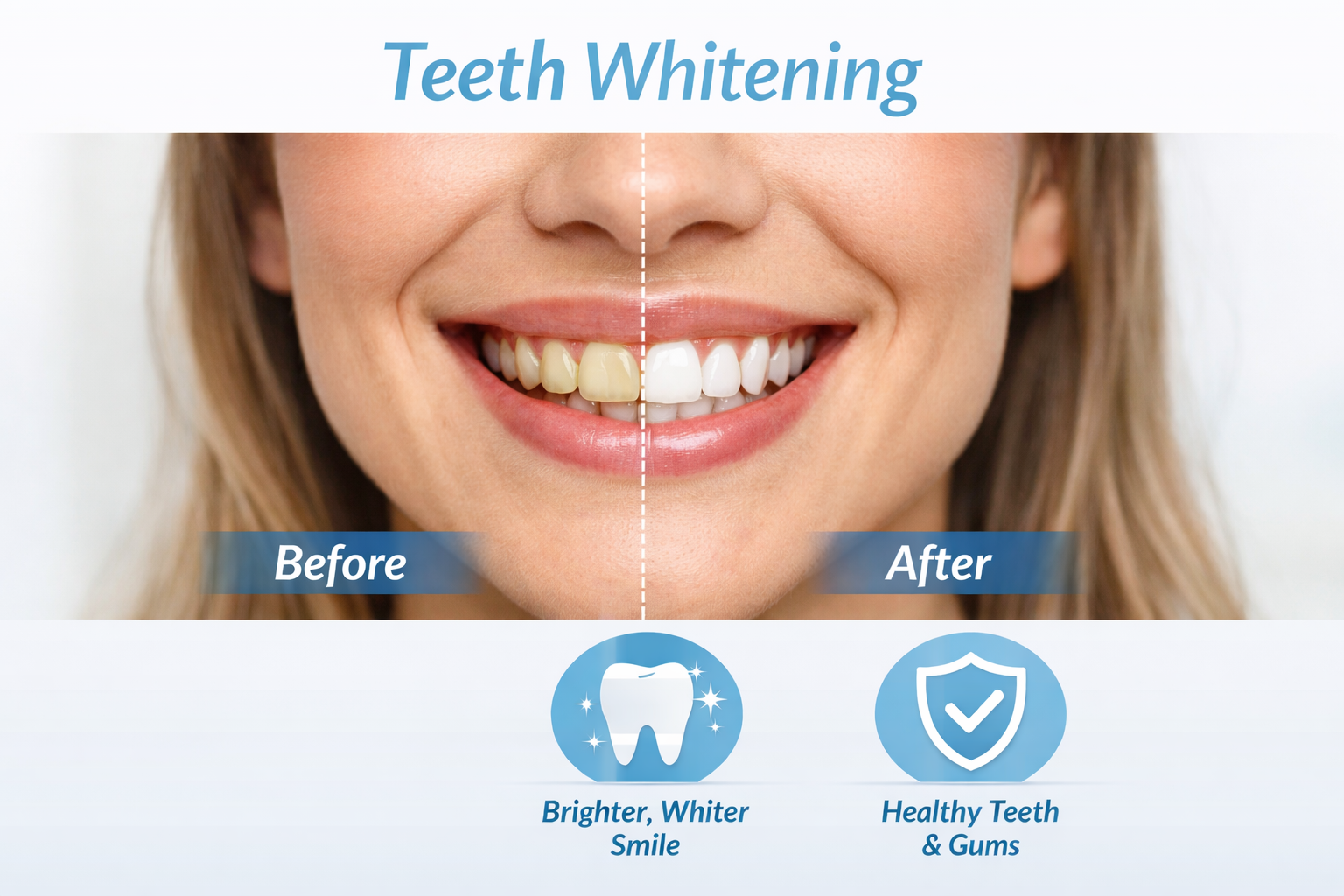
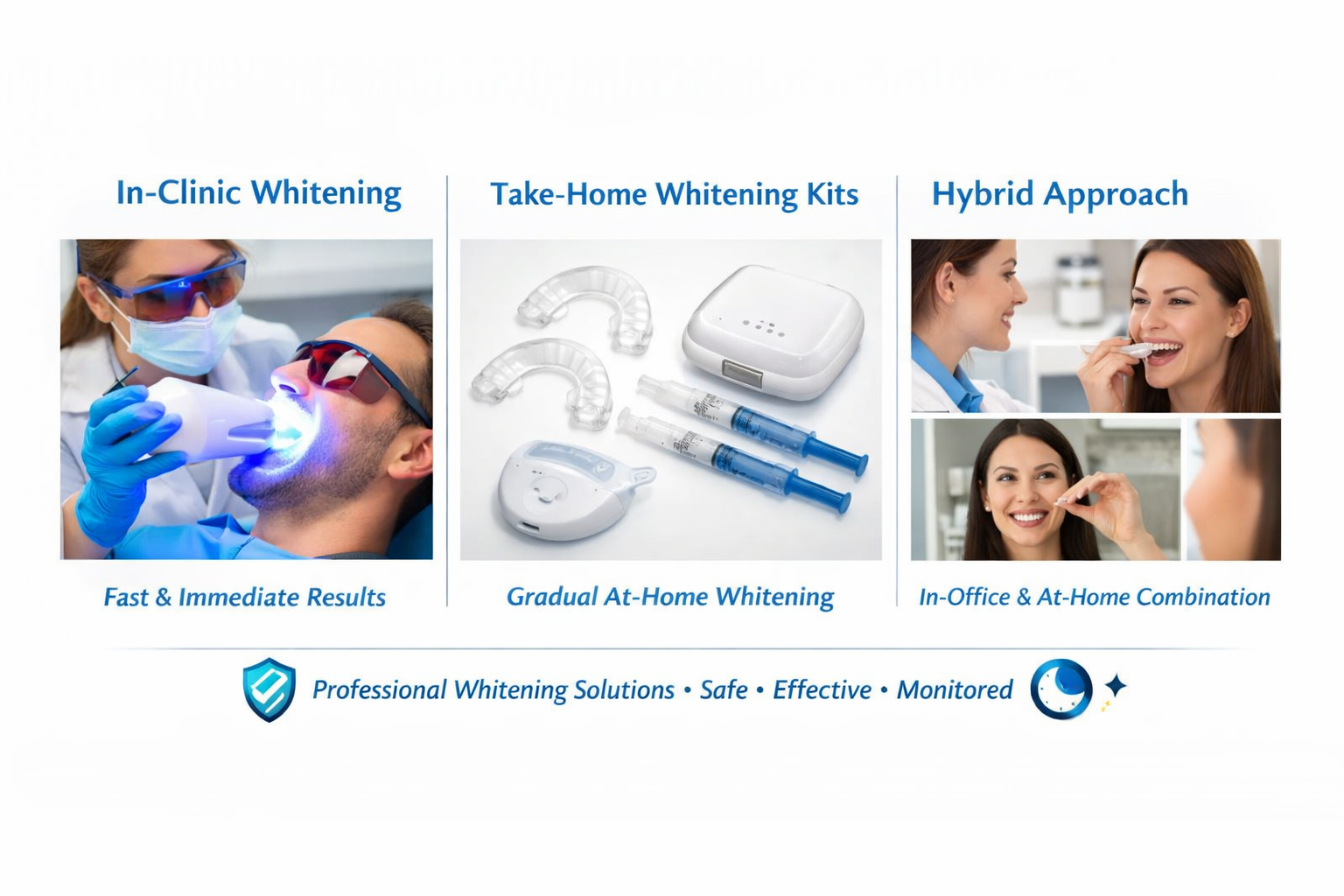
Professional teeth whitening comes in a few common formats, each with its own profile of convenience, speed, and sensitivity. The three main approaches are in-clinic (chairside) whitening, dentist-supervised take-home kits, and hybrid or guided approaches that combine elements of both.
In-clinic Whitening is usually performed in one or more supervised sessions. The clinician applies a professionally formulated whitening agent while isolating the gums and soft tissues to protect them. Where appropriate, light or heat may be used to accelerate the process, though modern practice often relies on proven chemical activation rather than excessive heat. The appeal of in-clinic treatment is the immediacy: a noticeable change can often be achieved in a single appointment. Comfort measures, precise application, and clinician oversight make this option attractive for those who prioritise speed and controlled results. Temporary sensitivity is common for a few days after treatment and is typically manageable with recommended desensitising measures.
Dentist-supervised take-home kits provide a more gradual route. The clinician supplies custom-fitted trays or professionally designed appliances with whitening gel in measured concentrations. Patients apply the gel at home for a prescribed number of hours per day or overnight, following clear instructions. This approach suits people with busy schedules who prefer a subtler, staged improvement. Because concentration levels used at home tend to be lower than in-clinic, sensitivity may be reduced, and the patient controls the pace of change. Regular check-ins with the clinician help monitor progress and address any issues promptly.
Guided hybrid approaches blend both options. A patient may begin with a short in-clinic session to achieve an initial lift, followed by take-home trays to refine or maintain the result. Alternatively, pre-treatment desensitisation may be carried out before an in-clinic session to reduce discomfort. Hybrid plans are useful for tailoring treatment to individual tolerance, desired speed, and lifestyle. The clinician's role is to coordinate the elements so the cumulative effect is safe and predictable.
The patient journey begins with a full assessment. This initial visit identifies oral health issues that should be treated before Whitening begins, such as decay or gum inflammation, and it allows the clinician to review restorations and discuss realistic outcomes. Baseline photographs and shade records are often taken so progress can be documented objectively and patients can see the change clearly.
Pre-treatment checks typically include an examination of gum health and a review of recent dental work. If there are untreated cavities or ongoing gum disease, these are prioritised. The clinician also checks for visible cracks, exposed root surfaces, or leaking margins around restorations, as these can influence both safety and the final appearance. Where custom trays are required, impressions or digital scans are taken at this stage.
On treatment day, the environment is controlled for comfort. For in-clinic sessions, soft tissue is isolated and protected, and the whitening agent is applied with care to avoid contact with gums. Patients are informed about sensations to expect: a temporary tingling or heightened sensitivity during and after treatment is possible, but it usually subsides in a few days. If a take-home approach is chosen, the clinician instructs the patient on tray insertion, gel volumes, wear times, and hygiene. Demonstrating the tray and having the patient practise insertion under supervision helps reduce user error.
Throughout the treatment, clinicians monitor progress. For in-clinic work, this means adjusting exposure times or concentrations as needed; for take-home regimes, it involves scheduled check-ins to ensure the patient is comfortable and that the Whitening is progressing as expected. If sensitivity arises, clinicians can suggest immediate measures — such as shorter wear times, use of desensitising toothpaste, or temporary pauses — and modify the plan accordingly.
After the active treatment, immediate post-treatment care focuses on comfort and protecting the new shade. Patients are advised about short-term behaviours such as avoiding highly pigmented foods and drinks for a set period and about using recommended oral hygiene practices. Follow-up appointments may include photographic comparisons to confirm the result and to discuss long-term maintenance. In all stages, the clinician's oversight ensures that adjustments can be made promptly and that the patient's experience remains safe and tolerable.
Setting realistic expectations is one of the most important parts of any successful teeth whitening journey. When patients understand what Whitening can and cannot achieve, they are far more likely to feel satisfied with their results. Teeth Whitening is designed to enhance your natural teeth shade, creating a fresher, brighter smile that still looks authentic and balanced. It does not aim to produce an artificial, overly white appearance. Instead, the goal is a noticeable yet natural improvement that harmonises with your facial features, skin tone, and overall dental health.
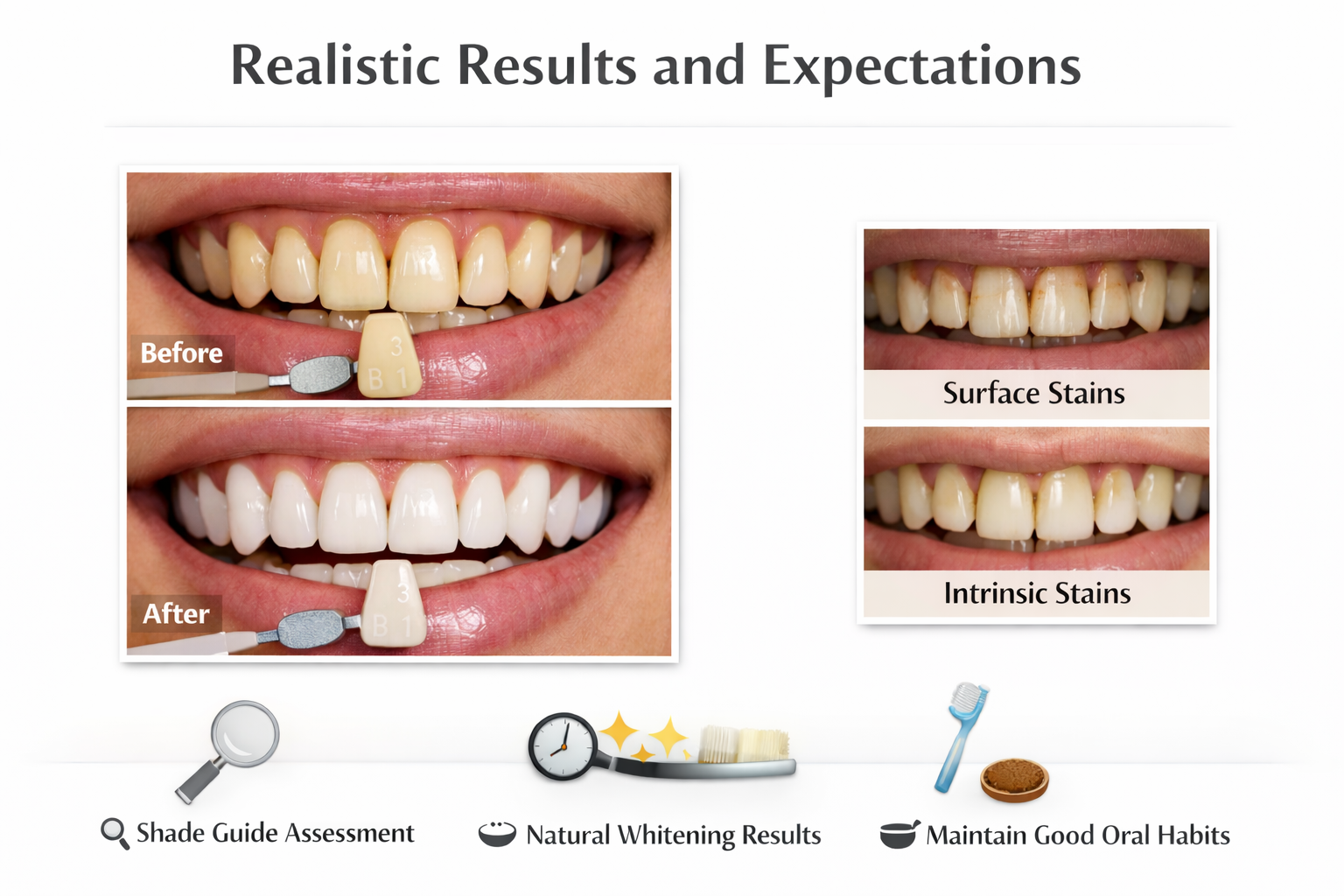
The degree of Whitening achieved varies from person to person. Several factors influence the final outcome. The type and depth of staining play a significant role. Surface-level extrinsic stains, commonly caused by coffee, tea, red wine, richly coloured sauces, and tobacco, tend to respond very well to whitening treatments. These stains sit on the outer enamel and can often be lightened effectively with professional care.
Intrinsic stains originate from within the teeth structure itself. These may be associated with natural ageing, certain medications, excessive fluoride exposure during development, or previous trauma to teeth. Intrinsic discolouration can be more resistant and may not respond as dramatically to standard Whitening alone. In such cases, a clinician may discuss alternative or complementary cosmetic options to achieve the desired improvement. The thickness and quality of enamel, as well as the presence of existing dental restorations such as crowns or fillings, can also affect the final result, as these materials do not whiten in the same way natural enamel does.
To ensure clarity and confidence, clinicians often document the starting shade using professional shade guides or baseline photographs. This allows patients to see objective comparisons before and after treatment. Visual references help set realistic expectations and make the improvement more measurable rather than relying solely on memory or perception.
It is equally important to understand that whitening results are not permanent. Longevity depends largely on daily habits and oral care. Frequent consumption of staining foods and drinks, smoking, and inconsistent brushing or flossing can shorten the lifespan of the results. Conversely, maintaining good oral hygiene, attending regular dental check-ups, and moderating exposure to staining substances can help preserve brightness for longer.
Touch-up treatments are a normal and expected part of long-term maintenance. Some individuals prefer occasional at-home top-ups under professional guidance, while others schedule periodic in-clinic refresh treatments. The appropriate interval varies depending on lifestyle and individual goals.
Whitening should be viewed as a managed enhancement rather than a one-time transformation. With informed expectations, professional oversight, and consistent aftercare, many patients enjoy a lasting, natural improvement that enhances their smile and strengthens their overall confidence.
Safety is the foundation of professional Teeth Whitening. While the goal is a brighter smile, the priority is always the health of the teeth, gums, and surrounding tissues. Whitening is not simply about applying a gel and waiting for change; it is a carefully controlled clinical process that balances effectiveness with protection. Every stage, from assessment to aftercare, is designed to minimise risk and support long-term oral health.
Before any whitening begins, a thorough oral examination is essential. A trained clinician evaluates enamel quality, gum health, existing fillings, crowns or veneers, and any signs of exposed dentine. Conditions such as untreated decay, active gum disease, or cracked enamel may require attention before Whitening is considered. This screening step ensures that Whitening is appropriate and that it will not compromise existing dental work or underlying oral health.
Soft tissue protection is another critical safety measure. During chairside procedures, protective barriers are placed over the gums and lips to shield them from prolonged contact with whitening agents. Isolation techniques help ensure that the gel remains precisely where it should be — on the teeth surface. For at-home systems, custom-fitted trays are designed to hold the whitening gel securely against the teeth while minimising contact with the gums. Poorly fitting trays can lead to leakage and irritation, which is why professional impressions and accurate fabrication matter.
Sensitivity management is also part of responsible clinical care. Some individuals experience temporary sensitivity during or after Whitening, particularly if they already have thin enamel or exposed dentine. Clinicians may recommend desensitising toothpastes, adjust application times, or modify concentration levels to improve comfort. In many cases, short breaks in treatment are enough to allow the teeth to settle before continuing.
Clinical standards extend beyond the ingredients themselves. Proper infection control procedures, clear documentation of baseline teeth shade, informed consent discussions, and follow-up reviews are all part of structured practice. Monitoring progress ensures that results develop evenly and that any unexpected reaction is addressed promptly. If adjustments are needed, the treatment plan can be modified in a safe and timely manner.
Professional oversight also includes consideration of existing restorations. Whitening agents do not change the colour of crowns, veneers, or composite fillings. A clinician will assess whether colour differences may appear after treatment and discuss realistic expectations. In some cases, Whitening is carried out before replacing visible restorations to achieve better overall harmony.
Professional Whitening is a blend of science, skill, and careful supervision. The ingredients are effective, but it is the clinical judgement behind their use that protects oral health. Through structured assessment, controlled application, and personalised care, Whitening can be delivered in a way that prioritises safety while achieving natural, balanced results.
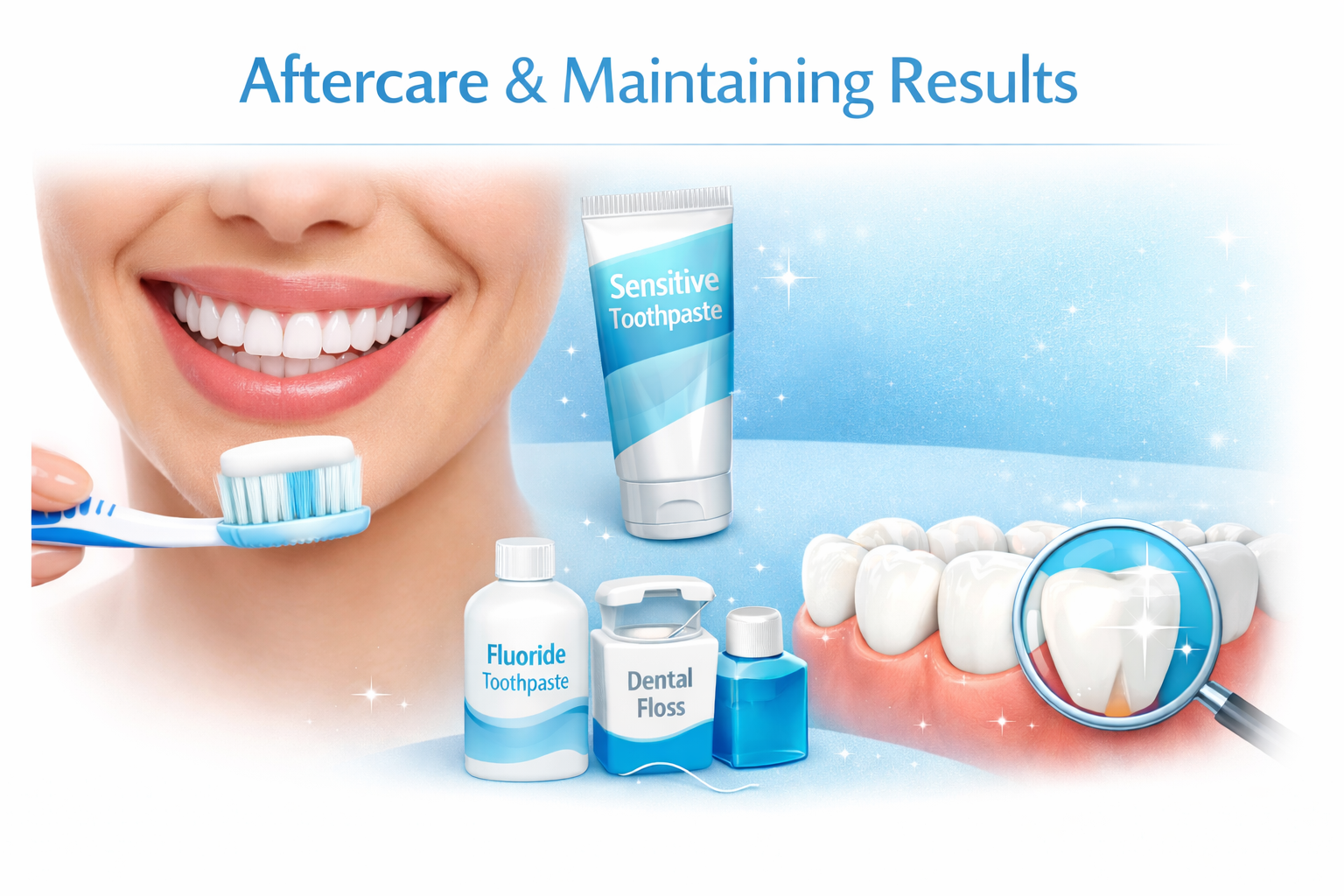
Aftercare following Teeth Whitening is simple, yet it plays a decisive role in protecting both your results and your overall oral health. In the first 24 to 72 hours, some individuals experience mild sensitivity. This is usually temporary and settles naturally as the teeth rehydrate and stabilise. During this short period, using a desensitising toothpaste formulated for sensitive teeth can significantly reduce discomfort. Brushing gently with a soft-bristled toothbrush is recommended, as enamel may be slightly more receptive immediately after treatment. Avoiding extremes of temperature in foods and drinks — very hot coffee or iced beverages, for example — can also help minimise sensitivity while the teeth adjust.
Oral hygiene should remain consistent but gentle. Twice-daily brushing with a fluoride toothpaste and daily flossing protect the enamel surface and the gum margin. Whitening does not weaken healthy enamel when carried out appropriately, but maintaining plaque control is essential to prevent staining from reaccumulating and to support gum health. A clean teeth surface naturally reflects light better, enhancing and preserving the brighter appearance achieved through treatment.
Dietary habits strongly influence how long whitening results last. For the first few days, it is wise to minimise exposure to highly pigmented substances such as coffee, red wine, black tea, soy sauce, curries, and dark berries. During this period, teeth are slightly more porous and can absorb stains more readily. Choosing lighter-coloured foods and rinsing the mouth with water after consuming staining items can make a noticeable difference. Over the longer term, moderation rather than complete avoidance is key. Small behavioural adjustments — such as drinking staining beverages through a straw where appropriate, or following them with water — can extend the life of your results.
Smoking has a particularly significant impact on whitening longevity. Nicotine and tar adhere to enamel and create persistent surface stains that gradually dull brightness. Patients who smoke often require more frequent maintenance treatments, and they are typically advised about how tobacco use directly affects cosmetic outcomes. Reducing or stopping smoking benefits not only whitening results but also overall oral and general health.
Maintenance is best approached conservatively. Periodic professional top-ups or supervised at-home Whitening with custom-fitted trays can refresh brightness safely when needed. While whitening toothpastes can help manage minor surface staining, they are not a substitute for professional treatments. Regular dental check-ups ensure restorations remain in good condition and that teeth and gums stay healthy enough for future Whitening. A carefully spaced, clinician-guided schedule provides the most reliable balance between a lasting, brighter smile and long-term dental wellbeing.
Professional Whitening does not permanently weaken healthy enamel when carried out under a clinician's supervision. Short-term sensitivity can occur, but protective protocols and controlled exposure minimise risk. A clinician will assess the enamel condition before treatment.
The duration of the effect varies. Many people enjoy noticeable improvement for months to years, depending on diet, smoking, and oral hygiene. Occasional touch-ups help sustain the shade.
People with sensitivity can often be treated but may need a gentler approach. Desensitising measures before or during treatment and lower concentration home regimes are common ways to reduce discomfort.
Restorative materials do not lighten like natural teeth structure. A clinician will review restorations and may suggest cosmetic adjustments to achieve a uniform appearance after Whitening.
Adults with healthy gums and teeth are typical candidates. People with active decay, untreated gum disease, certain restorations, or very thin enamel may be advised to delay or consider alternatives. Pregnancy and breastfeeding call for professional advice before proceeding.
In-clinic treatments can show a visible change immediately. Take-home systems produce gradual change over days to weeks. The expected timeline is part of the clinician's recommendation.
Treatment is usually comfortable for most patients. Some will experience temporary sensitivity or a tingling sensation; severe pain is uncommon and should be reported to the clinician for management.
Whitening reduces staining from smoking but does not eliminate the habit's ongoing effect. Long-term maintenance requires either quitting smoking or accepting more frequent touch-ups.
Whitening toothpastes can reduce surface stains, but do not deliver the same level of lightening as peroxide-based professional treatments. They are useful for maintenance between professional sessions.
Whitening lightens natural teeth structure; veneers change teeth colour and shape by covering the teeth surface. Veneers are a different aesthetic solution and may be recommended when Whitening is unlikely to achieve the desired result.
Treatment for younger patients is approached with caution. A clinician assesses teeth maturity and enamel thickness before recommending any whitening for adolescents.
Professional guidance is advised. Many clinicians recommend delaying Whitening during pregnancy and breastfeeding as a precautionary measure until personalised advice is obtained.
Whitening does not typically damage restorations, but it will not change their colour. Planning ensures restorations remain functional and aesthetic in the context of the new shade.
The interval between top-ups depends on individual habits and sensitivity. Some patients need touch-ups annually; others may wait longer. The clinician recommends a schedule based on outcomes and lifestyle.
Every smile tells a story. The experiences shared here reflect the journeys of individuals who chose professional whitening to refresh their appearance with care and clinical guidance.
After years of coffee staining, the difference was remarkable yet completely natural. The whole process felt safe and carefully managed from start to finish.
— Patient, age 42I was worried about sensitivity given my dental history, but the tailored approach made a real difference. The results exceeded what I thought was possible for my teeth.
— Patient, age 35The take-home kit fitted perfectly and the gradual improvement suited my schedule. Being able to check in with the clinician throughout gave me confidence in the process.
— Patient, age 51Having everything assessed properly beforehand meant no surprises. My smile looks brighter and fresher — exactly the kind of subtle change I was hoping for.
— Patient, age 29
Clinical oversight matters because it places knowledge, judgement, and structured monitoring at the centre of the whitening process. Before any whitening protocol begins, a qualified dental professional carries out a detailed assessment. This includes reviewing medical history, existing dental restorations, gum health, previous sensitivity issues, and the patient's cosmetic expectations. Whitening agents interact differently depending on enamel thickness, dentine shade, and the presence of fillings or crowns, so understanding these variables helps determine whether treatment is suitable and which approach is most appropriate.
Evidence-based practice underpins professional Whitening. Clinicians rely on materials that have been clinically tested for safety and effectiveness, used within established concentration ranges, and applied according to recognised standards. Soft tissues are protected, exposure times are carefully controlled, and instructions are clearly explained. Accurate shade recording before treatment provides a baseline reference, allowing outcomes to be measured objectively rather than estimated. This documentation supports transparency and helps manage expectations from the outset.
Monitoring continues throughout and after the procedure. Some individuals may experience temporary sensitivity, which is usually mild and short-lived, but professional supervision allows prompt adjustments. The clinician may reduce exposure time, modify gel strength, or recommend desensitising products to maintain comfort without compromising results. Follow-up appointments provide an opportunity to review shade change, reinforce aftercare guidance, and ensure that enamel and gum health remain stable. This structured approach — assessment, tailored treatment, supervision, and review — ensures Whitening is delivered responsibly, with oral health given equal priority to aesthetics.
Teeth Whitening is best understood as a considered professional enhancement rather than a cosmetic quick-fix. When managed by a clinician, it combines thorough assessment, appropriate technique, and sensible aftercare to achieve a natural, balanced improvement. The goal is not an artificial brightness but a refreshed appearance that complements facial features and maintains authenticity.
Outcomes are influenced by individual factors such as natural teeth colour, enamel translucency, previous dental work, and lifestyle habits like diet or smoking. Professional guidance helps patients understand these variables and set realistic expectations. Aftercare advice — covering oral hygiene, stain management, and maintenance routines — plays a significant role in preserving results over time.
With realistic goals and professional oversight, Whitening can be a reliable method of refreshing a smile and restoring confidence. The emphasis remains practical and ethical: safe procedures, honest communication, and sustainable results rather than exaggerated promises or instant transformations.
Professional Teeth Whitening is about enhancing what is naturally yours — guided by clinical expertise, grounded in safety, and delivered with genuine care for your long-term wellbeing. The result is a smile that feels authentically brighter, supported by knowledge rather than hype, and maintained through a partnership between you and your dental professional.